
DOT Tie-Down Requirements for Heavy Equipment: A Straightforward Guide
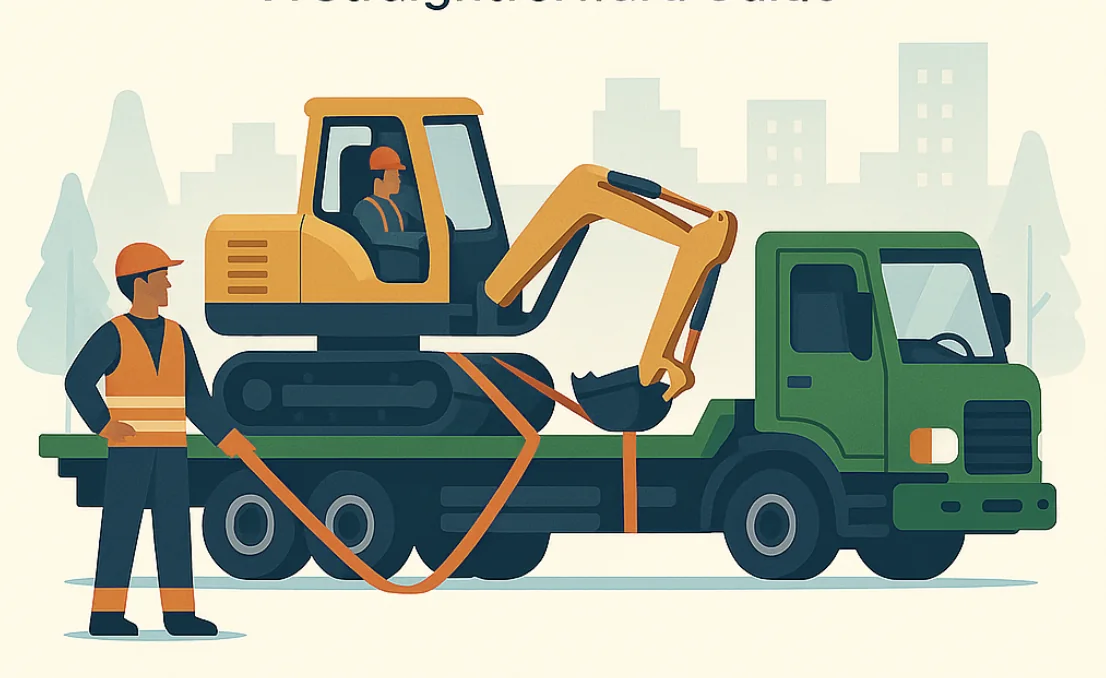
When you're hauling heavy equipment, it’s not just about getting from Point A to Point B. It's about doing it safely, and legally. The Department of Transportation (DOT) has strict tie-down regulations in place to protect drivers, other vehicles on the road, and the equipment itself. If you transport machinery with tracks or wheels, like excavators, bulldozers, or skid steers, knowing the rules is a must.
Alongside load securement, operators may need visibility into equipment location. Compare GPS asset-tracking systems and the Piccolo ATMS portable equipment tracker for that separate task.
This guide breaks down DOT’s tie-down rules in a clear, no-nonsense way so you can stay compliant and confident.
-
1
Introduction
- 1.1 The Basics: What Are DOT Tie-Down Requirements for Heavy Equipment?
- 1.2 Minimum Tie-Down Requirements
- 1.3 What Are the Requirements for Tie-Down Straps?
- 1.4 Direct vs. Indirect Securement
- 1.5 Working Load Limit (WLL): How It’s Calculated
- 1.6 Special Cases: Excavators, Steel Pipe & Unbraced Cargo
- 1.7 FAQs
- 1.8 What are the DOT regulations for chaining down heavy equipment?
- 1.9 What is the minimum tie-down requirement?
- 1.10 What are the requirements for a tie-down strap?
- 1.11 How many tie-downs for heavy equipment?
- 1.12 How many tie-downs for a 20-foot load?
- 1.13 What regulations require that there should be at least one tie-down?
- 1.14 How many tie-downs are required for a 30-foot load?
- 1.15 How many tie-downs are required for a 15-foot load?
- 1.16 How many tie-downs per 10 feet?
- 1.17 How many tie-downs should you use when hauling heavy equipment with crawler track or wheels?
- 1.18 What is the overhang rule for FMCSA?
- 1.19 What is the difference between direct and indirect load securement?
- 1.20 What are the requirements for tie-downs?
- 1.21 How is the working load limit determined for a tie-down?
- 1.22 How to calculate load securement?
- 1.23 What grade chain for hauling equipment?
- 1.24 Can you use rope to tie down loads?
- 1.25 What are the DOT tie-down requirements for excavators?
- 1.26 How many tie-downs are required to secure 33 feet of steel pipe?
- 1.27 How many tie-downs are required for cargo that is not blocked or braced, is four feet long and weighs 1200 pounds?
The Basics: What Are DOT Tie-Down Requirements for Heavy Equipment?
DOT regulations require that all heavy equipment transported on flatbeds or trailers be properly secured using tie-downs that meet specific standards. According to FMCSA (Federal Motor Carrier Safety Administration), you must use tie-downs that are strong enough for the load, placed correctly, and in good condition.
Minimum Tie-Down Requirements
- At least 4 tie-downs for any piece of equipment over 10,000 lbs
- 1 tie-down every 10 feet of cargo
- At least 2 tie-downs no matter how small the load
If the equipment is longer than 10 feet, you need additional tie-downs for every 10 feet or portion thereof. So for a 20-foot load, that’s a minimum of 4 tie-downs. For 30 feet, you’ll need 5.
Also, tie-downs must be attached to both sides of the trailer, and to a solid part of the equipment frame, not a weak attachment point.
What Are the Requirements for Tie-Down Straps?
- Straps must be rated for the working load limit (WLL) of the cargo
- They must be free of cuts, excessive wear, or damage
- Edge protection is required if the straps contact sharp edges
- You cannot use rope for heavy equipment tie-downs, it’s not allowed
Direct vs. Indirect Securement
- Direct securement: Tie-downs go directly from the trailer to the equipment
- Indirect securement: Tie-downs go over the equipment and attach to the trailer on both ends
Both methods are acceptable as long as they meet the working load limit requirements.
Working Load Limit (WLL): How It’s Calculated
The WLL is the maximum weight a tie-down can safely handle. It's usually labeled on chains, straps, or binders. The total WLL of your tie-downs must be at least 50% of the load’s weight. For example, if you’re hauling a 20,000 lb excavator, the combined WLL of your tie-downs must be 10,000 lbs or more.
Special Cases: Excavators, Steel Pipe & Unbraced Cargo
- Excavators and Tracked Equipment: Must have 4 tie-downs minimum, securing both the front and rear of the unit.
- 33-Foot Steel Pipe Load: You’ll need at least 5 tie-downs.
Unblocked Cargo (4 feet, 1200 lbs): Must be secured with 2 tie-downs minimum.
FAQs
What are the DOT regulations for chaining down heavy equipment?
You must use at least 4 chains (or straps) and secure both front and rear parts of the equipment. Each tie-down must meet or exceed the working load limit requirements.
What is the minimum tie-down requirement?
At least 2 tie-downs for any load, even under 10 feet. If the load is over 10,000 lbs, you need 4.
What are the requirements for a tie-down strap?
It must be rated for the load, in good condition, and protected from sharp edges.
How many tie-downs for heavy equipment?
At least 4 for loads over 10,000 lbs.
How many tie-downs for a 20-foot load?
Minimum of 4.
What regulations require that there should be at least one tie-down?
FMCSA regulation 393.100 to 393.136 covers all cargo securement requirements.
How many tie-downs are required for a 30-foot load?
At least 5.
How many tie-downs are required for a 15-foot load?
At least 3.
How many tie-downs per 10 feet?
1 tie-down per 10 feet of cargo.
How many tie-downs should you use when hauling heavy equipment with crawler track or wheels?
4 tie-downs minimum: 2 in front and 2 in the rear.
What is the overhang rule for FMCSA?
Loads extending more than 4 feet beyond the rear of the trailer must be flagged and may require lights, depending on time of day and state laws.
What is the difference between direct and indirect load securement?
Direct securement ties the equipment directly to the trailer; indirect goes over the equipment and attaches on both sides.
What are the requirements for tie-downs?
They must be rated, in good shape, properly placed, and meet WLL standards.
How is the working load limit determined for a tie-down?
It’s usually printed on the tie-down or determined by manufacturer specs.
How to calculate load securement?
Add up the WLL of your tie-downs, it must equal at least half of your total load weight.
What grade chain for hauling equipment?
Use Grade 70 or higher (like Grade 80 or 100) for heavy equipment.
Can you use rope to tie down loads?
Not for heavy equipment, ropes don’t meet DOT regulations.
What are the DOT tie-down requirements for excavators?
Minimum 4 tie-downs: secure both front and rear of the machine.
How many tie-downs are required to secure 33 feet of steel pipe?
At least 5.
How many tie-downs are required for cargo that is not blocked or braced, is four feet long and weighs 1200 pounds?
At least 2 tie-downs.
Getting your tie-downs right isn’t just about avoiding fines, it’s about protecting your equipment and the lives of everyone on the road. Need help tracking compliance or monitoring your heavy equipment fleet in real time? Wireless Links has the GPS, dashcam, and sensor solutions to keep your operation safe and secure.
Get a Live Demo
Fill out the form below and a member of our team will get back to you
Article Author

Related Resources
- Best AirTag Alternatives (2026): Top Trackers for iPhone, Android, Wallets, and Business Assets January 19, 2026
- Commercial Fleet Insurance: Everything You Need to Know December 08, 2025
- CARB Compliance: What It Means and How to Stay Compliant December 04, 2025