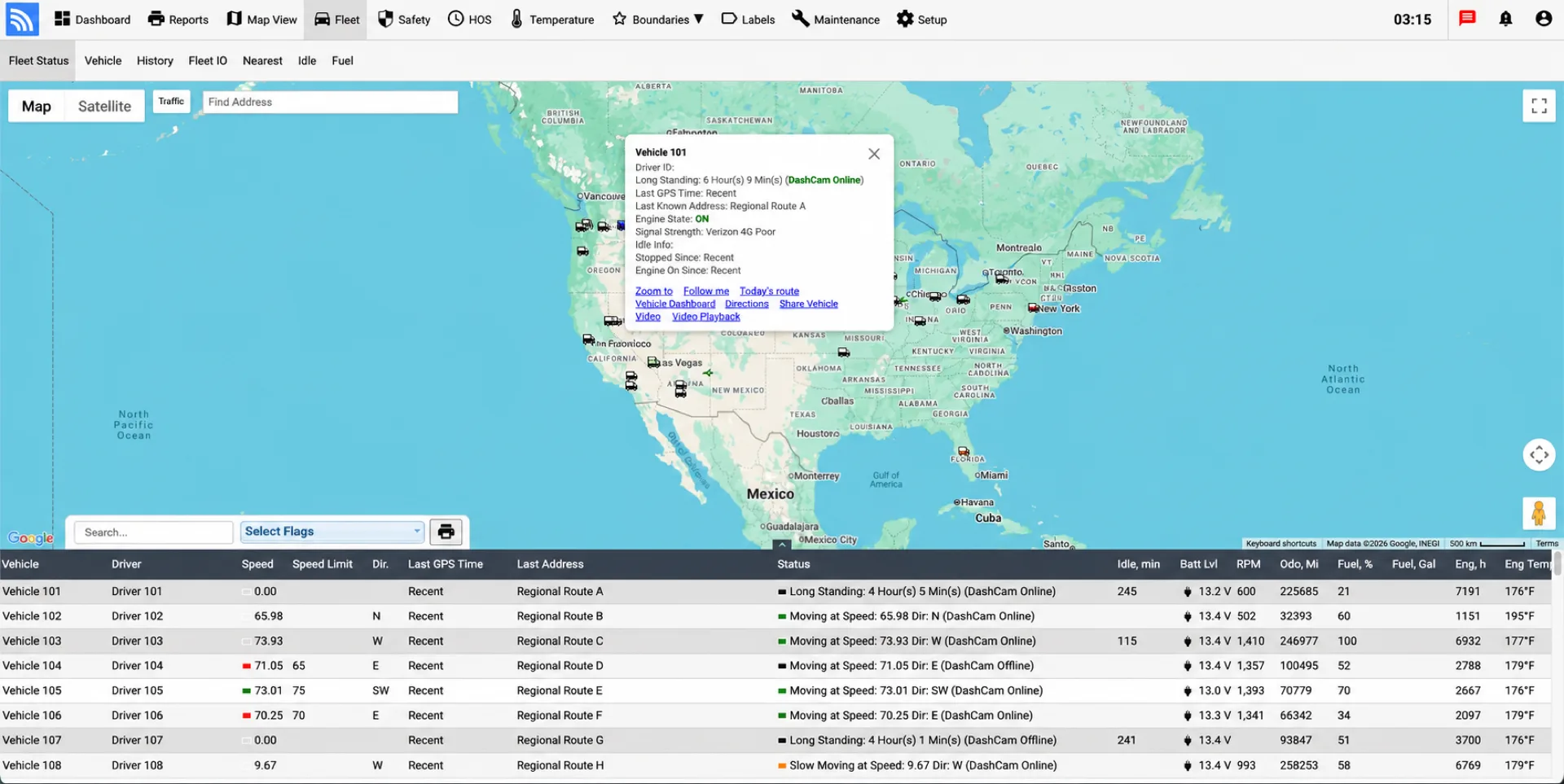
Bring vehicles, equipment, trailers, connected sensors, and operational records into one platform. Monitor location, trips, diagnostics, maintenance, temperature, video, and alerts from a shared workspace.
Request Portal AccountDitch fragmented software and coordinate all asset tracking, reefer cold chains, driver safety scores, and maintenance tickets in a high-performance web interface. Designed for operations managers, dispatchers, and business owners.
See exactly where every vehicle and trailer is, in real time. Interactive maps with speed, heading, and route history let dispatchers optimize delivery windows and respond to delays instantly. Set geofence boundaries to receive automated alerts when assets enter or leave designated zones, reducing unauthorized usage and improving accountability across your entire operation.
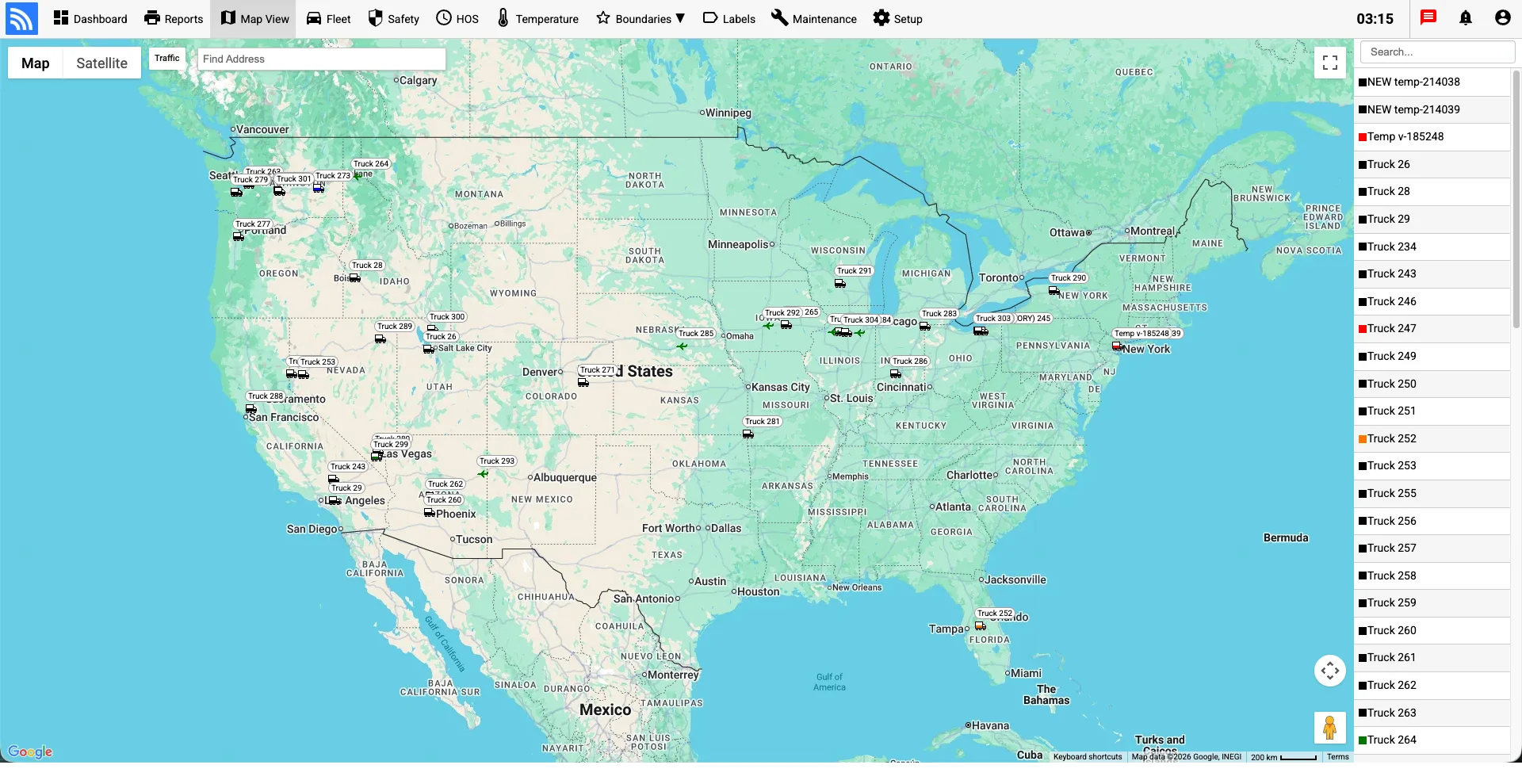
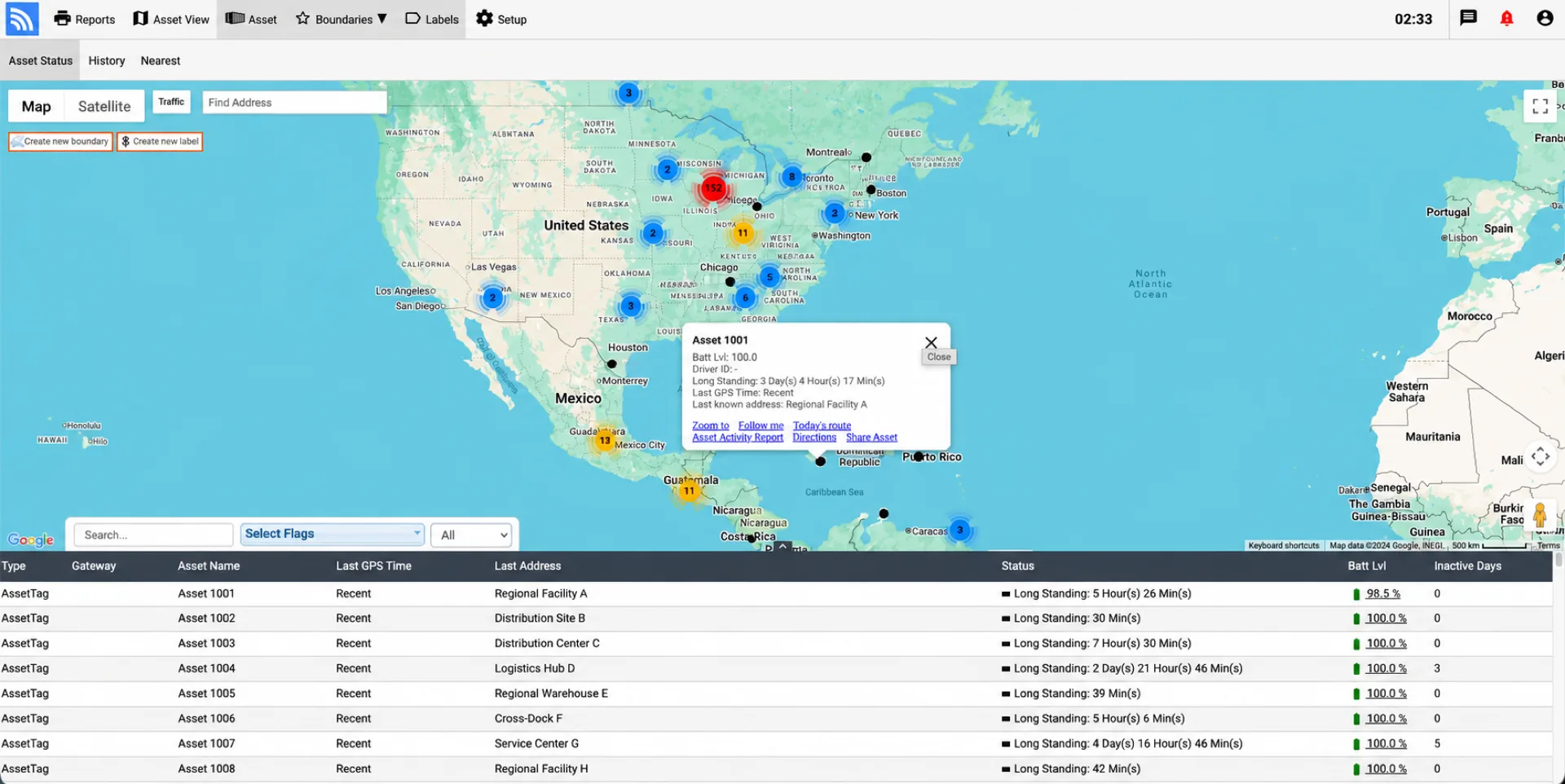
Gain insights on trailer utilization and dormancy to better manage inventory, leasing, sell or redistribute underutilized assets. Monitor dwell and detention times with location-based reporting to enhance operations and ensure precise billing. Real-time alerts for mismatched trailers help avoid delays and load damage, maintaining customer satisfaction with accurate, on-time deliveries.
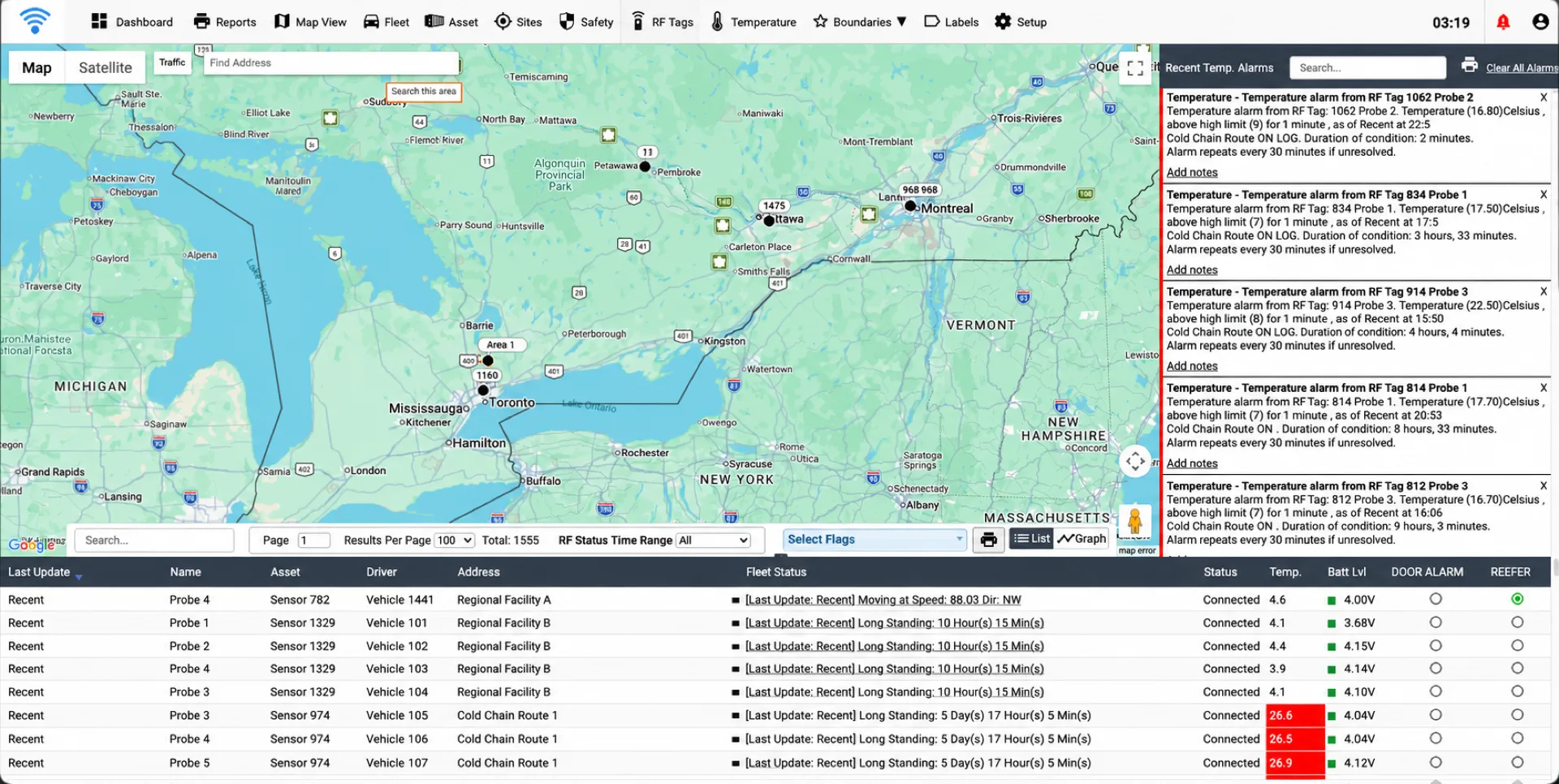
Connect supported temperature probes to refrigerated vehicles, trailers, containers, cold rooms, and temperature-sensitive cargo. Configure thresholds, receive exception alerts, and review historical temperature and location records that support quality and compliance workflows.
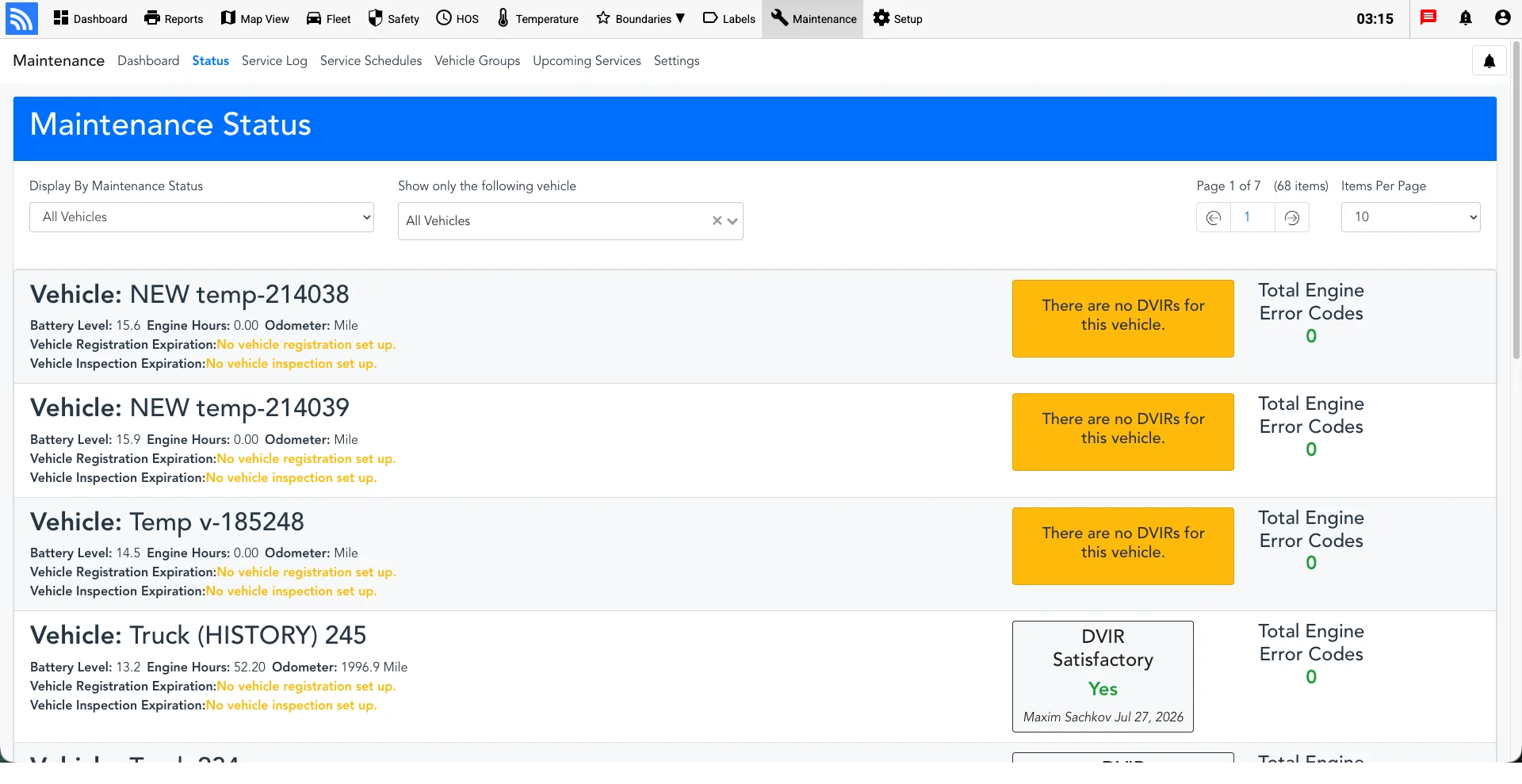
Automate preventive maintenance workflows based on engine hours, mileage thresholds, and diagnostic trouble codes. Track service history, upcoming inspections, and cost analytics in one centralized dashboard. Vehicle health scores help fleet managers prioritize high-risk units and prevent roadside breakdowns that disrupt delivery schedules and increase operational costs.
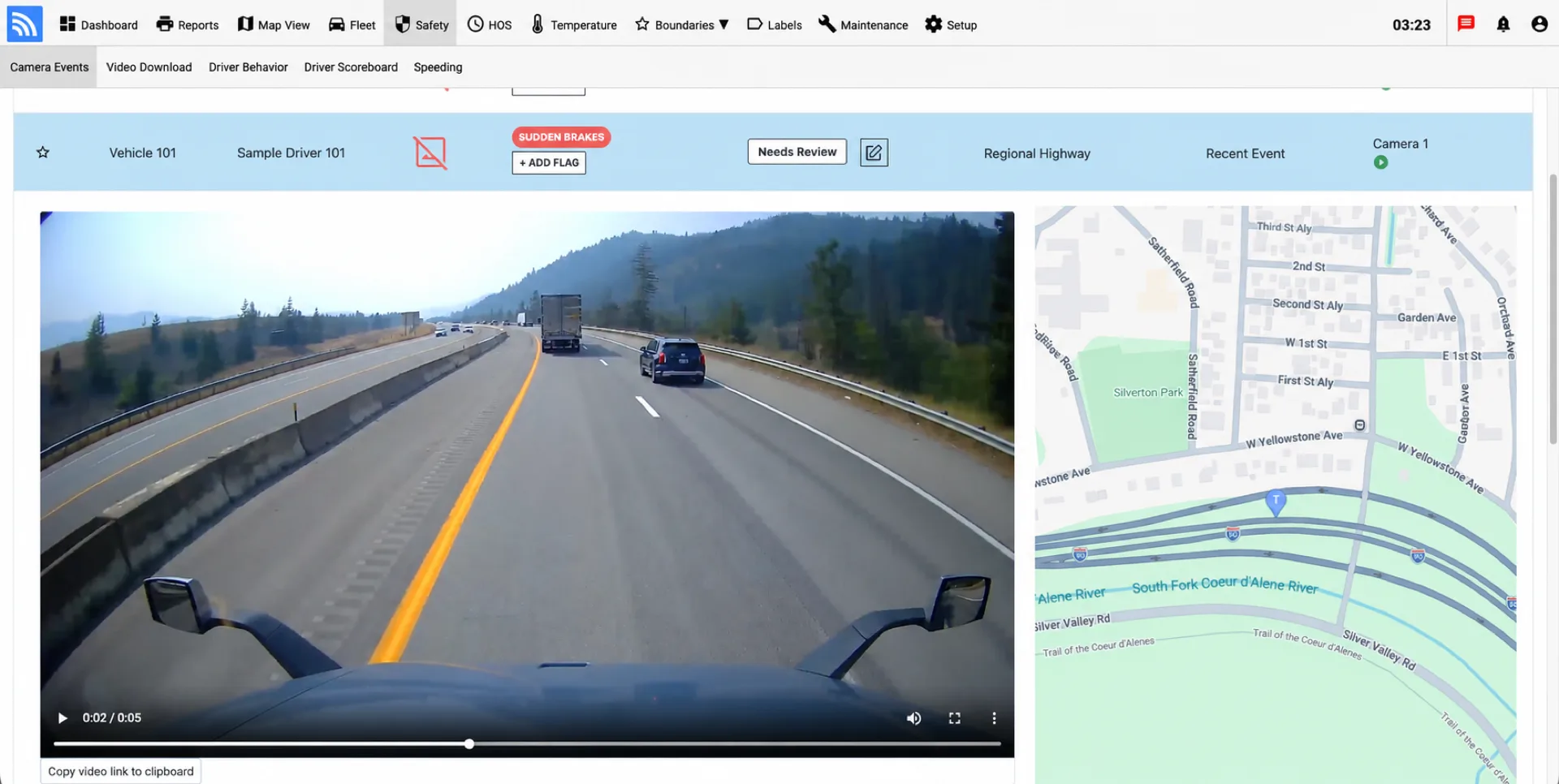
Combine compatible road- and driver-facing cameras with telematics events such as harsh braking, speeding, and configured AI detections. Safety teams can review event-linked footage, identify patterns, coach drivers, and investigate incidents with a clearer operational record.
Highly responsive map showing vehicle speeds, headings, HOS statuses, and route overlays. Uses geofence layers to track entry/exit of warehouses automatically.
Pulls engine RPM, odometer values, and diagnostic trouble codes (DTC) straight from the vehicle engine computer. Prevents costly breakdowns with smart notifications.
Track driving logs, duty cycles, rest breaks, and compliance alerts. View dashboard timelines of driver shifts to prevent fatigue violations.
Construct custom notifications using logical thresholds (e.g. speed > 65mph AND coolant temp > 220°F) to capture extreme events immediately.
Maintain detailed records of multi-compartment cargo temperature, humidity, and door status indicators for FSMA regulatory audits.
Link telematics data straight into third-party TMS systems, ERPs, and logistics dispatch software with our high-throughput REST APIs.
Fleet.Net is a cloud-based telematics platform designed to organize data from vehicles, assets, cameras, sensors, and supported mobile workflows. Teams can use one interface to locate assets, review trips and diagnostics, manage maintenance, monitor exceptions, and access the operational information relevant to their roles.
User Access and Operational Control: Enterprise operations involve teams with different responsibilities. Fleet.Net supports controlled user access so organizations can give dispatch, maintenance, safety, compliance, and management teams the information appropriate to their work. Available permissions and audit capabilities depend on the deployed configuration.
Data Security and Governance: Fleet and asset data may include driver activity, routes, diagnostics, video, and cargo-condition records. Wireless Links uses security controls appropriate to the platform and can discuss current encryption, access, retention, hosting, and governance requirements during solution design. Specific certifications or contractual controls should be confirmed for the proposed deployment.
Telematics data becomes more useful when it connects with the systems that already run the operation. Fleet.Net provides supported APIs and integration tools for sharing location, trips, diagnostics, alerts, sensor readings, and other authorized data with TMS, ERP, dispatch, maintenance, and proprietary applications.
Developer Integration Workflow & Authentication:
Custom Alert logical queries syntax: The core of our event-driven system is a custom logical query builder. Users can create complex rulesets using boolean logical conditions to trigger alerts. For example, a user can write a query that flags a vehicle if: (Engine_RPM > 3200 AND Vehicle_Speed > 65) OR (Coolant_Temperature > 220 AND Engine_Load > 85). When these conditions are met, the logic engine processes the alert within milliseconds, sending immediate push notifications, SMS alerts, and email notifications to the designated managers.
Availability and Data Continuity: Fleet.Net is designed to support ongoing fleet and asset operations, while compatible Piccolo devices can buffer records when cellular communication is unavailable and upload them after connectivity returns. Current hosting architecture, availability commitments, backup practices, and recovery requirements should be confirmed for each enterprise agreement.
Raw telemetry data is valuable, but transforming that data into actionable business intelligence is where fleets achieve massive operational cost savings. The Wireless Links platform features a built-in Analytics Engine that automatically digests historical device statistics, driver safety ratings, fuel burn matrices, and sensor events. Fleet executives can build custom reports from scratch using a drag-and-drop report constructor. Choose from over fifty metrics—such as engine idle time vs. active PTO hours, state-by-state mileage sheets for international fuel tax agreement (IFTA) filings, and sensor temperature fluctuations—and lay them out in clean, visual charts.
Automated Scheduled Email Deliveries: Management teams cannot spend their entire day logged into telematics portals. To ensure stakeholders stay informed, our platform includes automated report scheduling. Define custom delivery intervals (daily, weekly, or monthly) and select recipient email groups. The platform compiles the data, generates PDF charts or CSV spreadsheets, and delivers them directly to key stakeholders' inboxes. For example, a maintenance supervisor can receive a weekly diagnostic trouble code summary every Monday morning, while operations managers receive weekly fleet utilization metrics to assess overall asset productivity.